Introduction
Japandi home decor is a beautiful fusion of Japanese simplicity and Scandinavian functionality. This design style focuses on clean lines, natural materials, soft neutral tones, and intentional living. It creates a peaceful atmosphere that feels warm, cozy, and clutter-free at the same time. For Pinterest lovers who adore aesthetic, calming interiors, Japandi is the perfect inspiration for creating a home that feels balanced and timeless.
If you want your space to look modern yet inviting, minimal yet comfortable, these 21 Japandi home decor ideas will help you achieve that calm, minimal look effortlessly.
Why Japandi Is the Best Choice for a Calm Home
Japandi design blends the philosophy of “less is more” with warmth and practicality. Unlike cold minimalism, it adds texture, wood tones, and soft layers to make the space feel lived-in. It encourages mindful decorating—choosing quality over quantity and focusing on pieces that truly matter.
This style is perfect for small apartments, family homes, and even studio spaces. It reduces visual noise, improves mental clarity, and makes your home feel like a peaceful retreat. Let’s explore the best Japandi decor ideas you can try today.
1. Neutral Earth Tone Palette
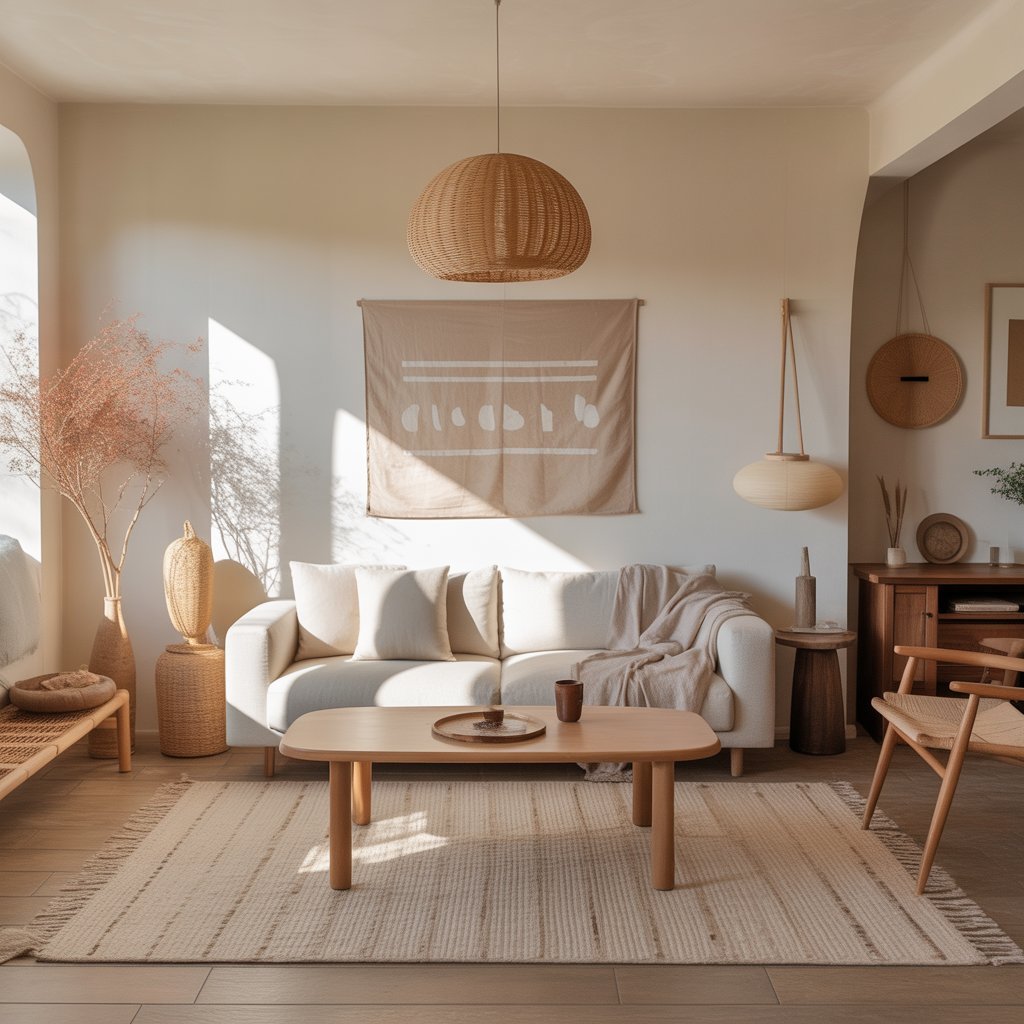
Using a neutral earth tone palette is the foundation of Japandi design. Think soft beige, warm white, muted grey, taupe, and light brown shades that create a soothing environment. These colors reflect natural light beautifully and make the room feel airy and open. Avoid overly bright or bold colors, as they can disturb the calm atmosphere. Instead, layer similar tones to add subtle depth and warmth without overwhelming the space.
Earthy tones also allow furniture and textures to stand out naturally. Wooden accents, linen fabrics, and ceramic pieces look more elegant against neutral backdrops. This palette creates visual harmony and makes every decor piece feel intentional. A soft color scheme is essential if you want your home to feel peaceful, organized, and effortlessly minimal.
2. Low Wooden Furniture
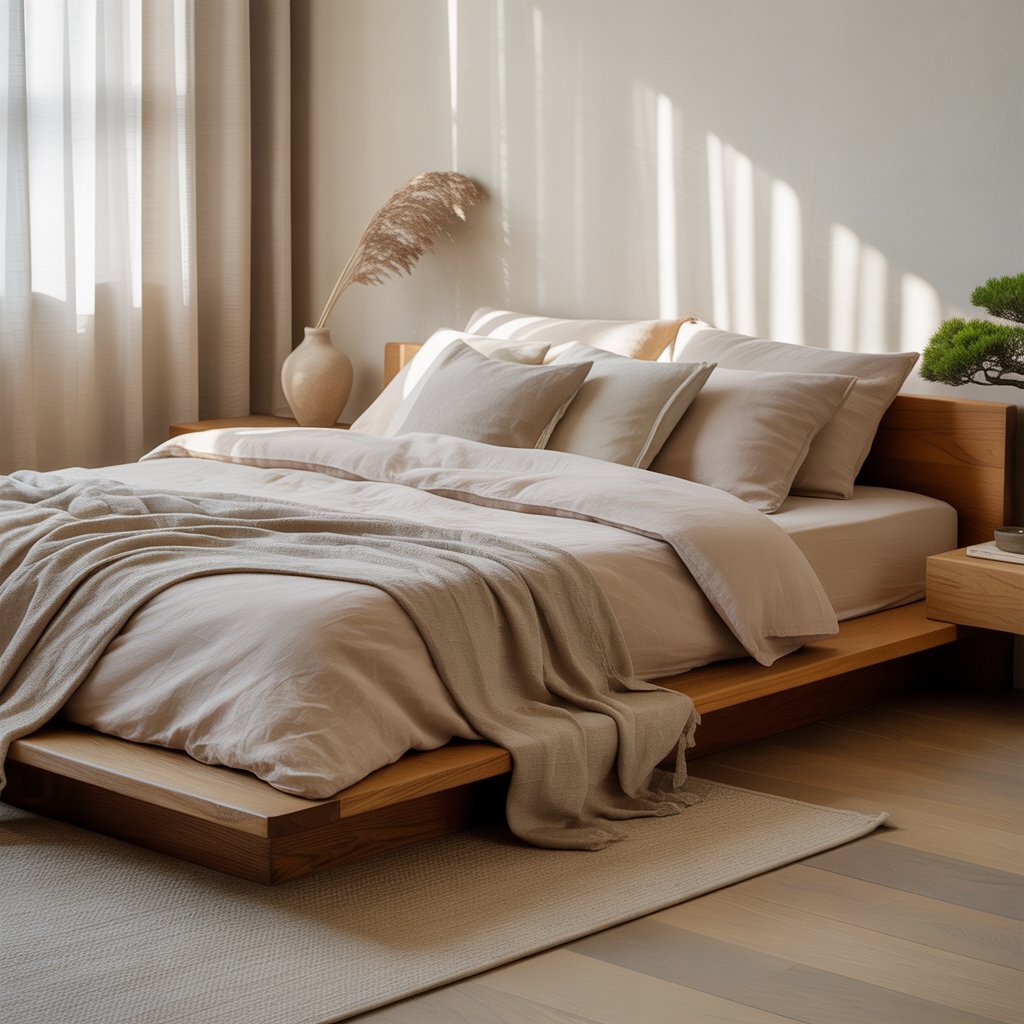
Low-profile wooden furniture is inspired by traditional Japanese interiors. Choose simple wooden sofas, platform beds, and coffee tables that sit closer to the ground. This creates a grounded feeling and makes ceilings appear higher, giving the illusion of a more spacious room. Clean lines and smooth finishes are key to maintaining a minimalist aesthetic.
Natural wood tones add warmth and organic texture to the space. Oak, ash, and walnut finishes work beautifully in Japandi interiors. Avoid ornate carvings or heavy detailing; instead, opt for simple silhouettes. Low furniture encourages a relaxed and peaceful lifestyle while keeping the room visually light and uncluttered.
3. Minimal Wall Art
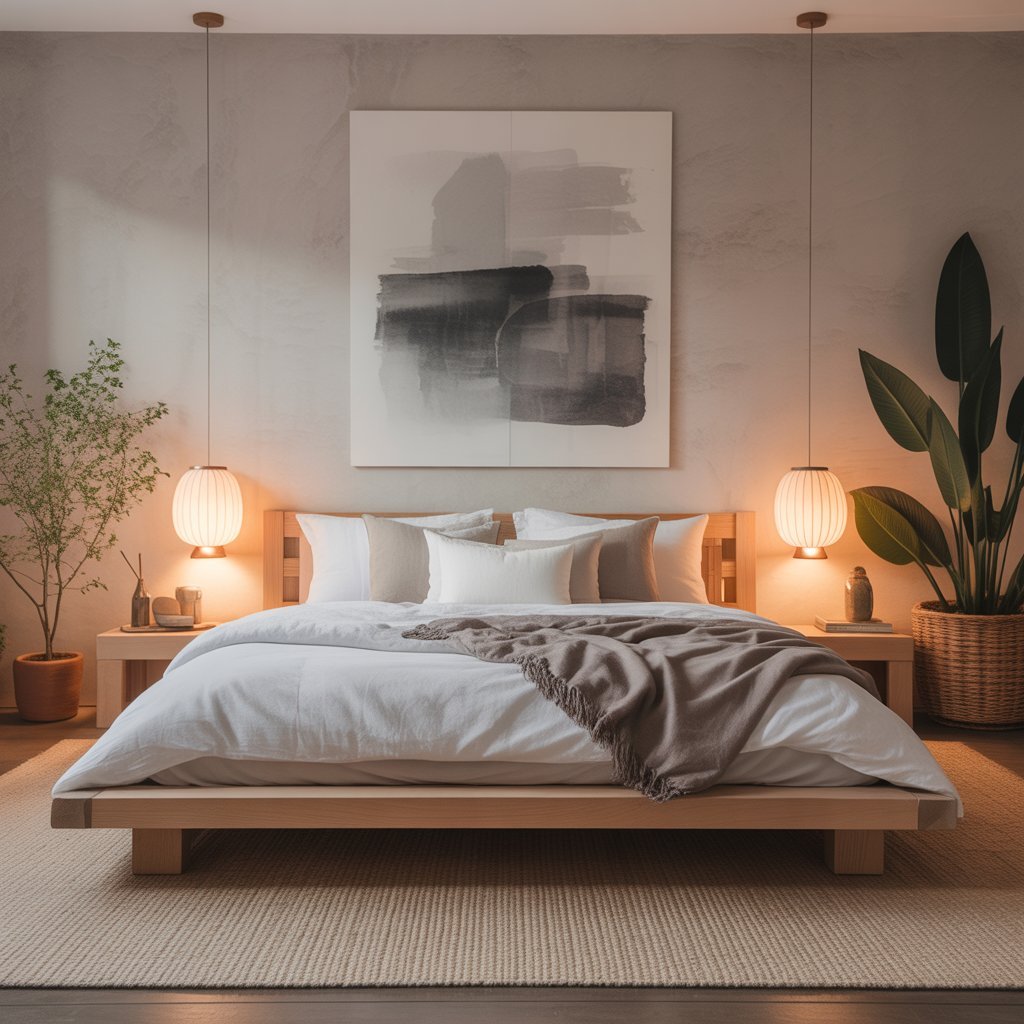
Wall art in Japandi spaces should be simple and meaningful. Choose abstract line art, nature-inspired prints, or black-and-white illustrations. Large statement pieces work better than multiple small frames because they reduce visual clutter and create a clean look. Frames in light wood or thin black metal enhance the minimalist aesthetic.
Negative space plays an important role in Japandi interiors. Leaving some walls empty creates breathing room and allows the eye to rest. The goal is not to fill every wall but to decorate intentionally. Thoughtful art pieces add personality without disturbing the calm and balanced environment.
4. Natural Textiles
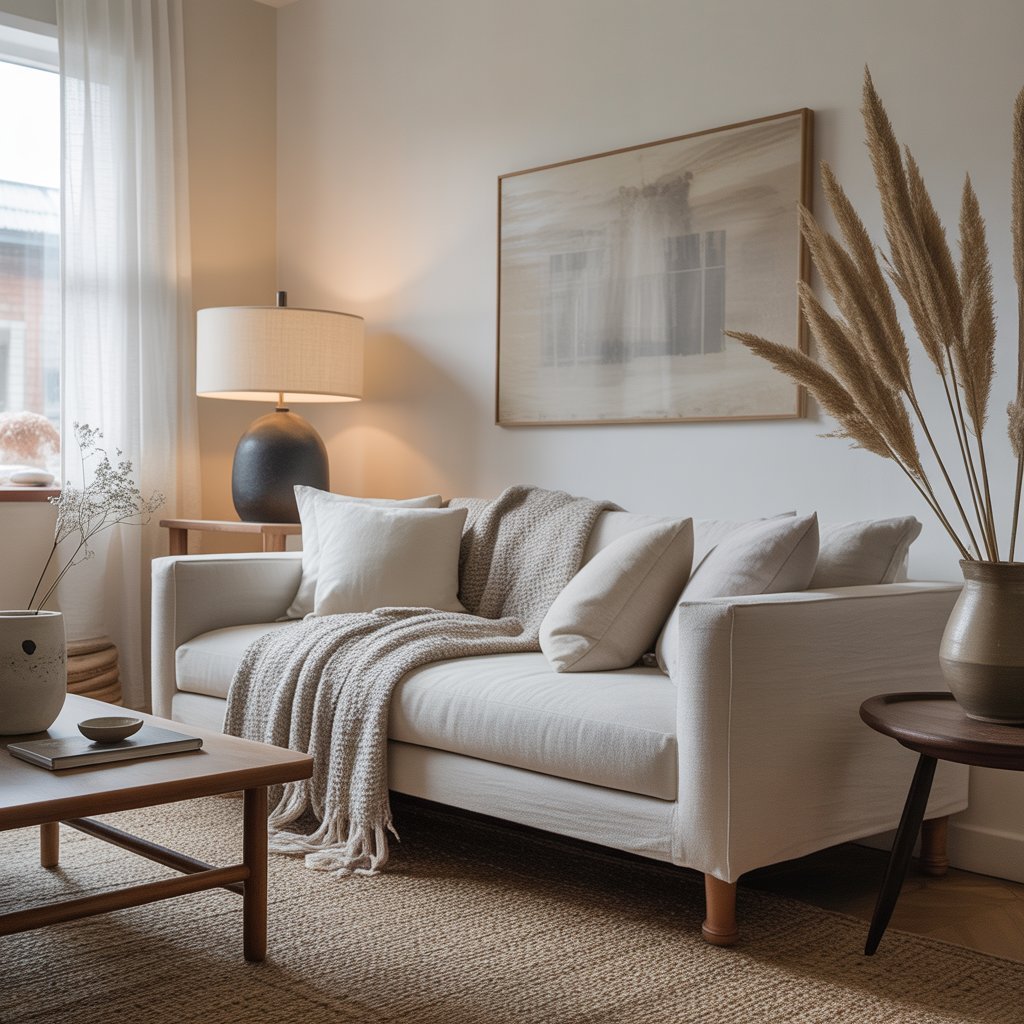
Natural fabrics like linen, cotton, wool, and jute are essential in Japandi decor. These materials bring softness and warmth to the clean, minimal design. Choose neutral-colored curtains, textured throw blankets, and simple cushions to create depth without adding visual chaos. Layering different textures makes the space feel cozy yet refined.
Avoid synthetic or shiny fabrics, as they disrupt the organic aesthetic. Instead, embrace slightly wrinkled linen or handwoven textiles that celebrate imperfection. These subtle textures create visual interest while maintaining harmony. Natural textiles enhance comfort and align perfectly with the Japandi philosophy of simplicity and authenticity.
5. Indoor Plants with Simplicity
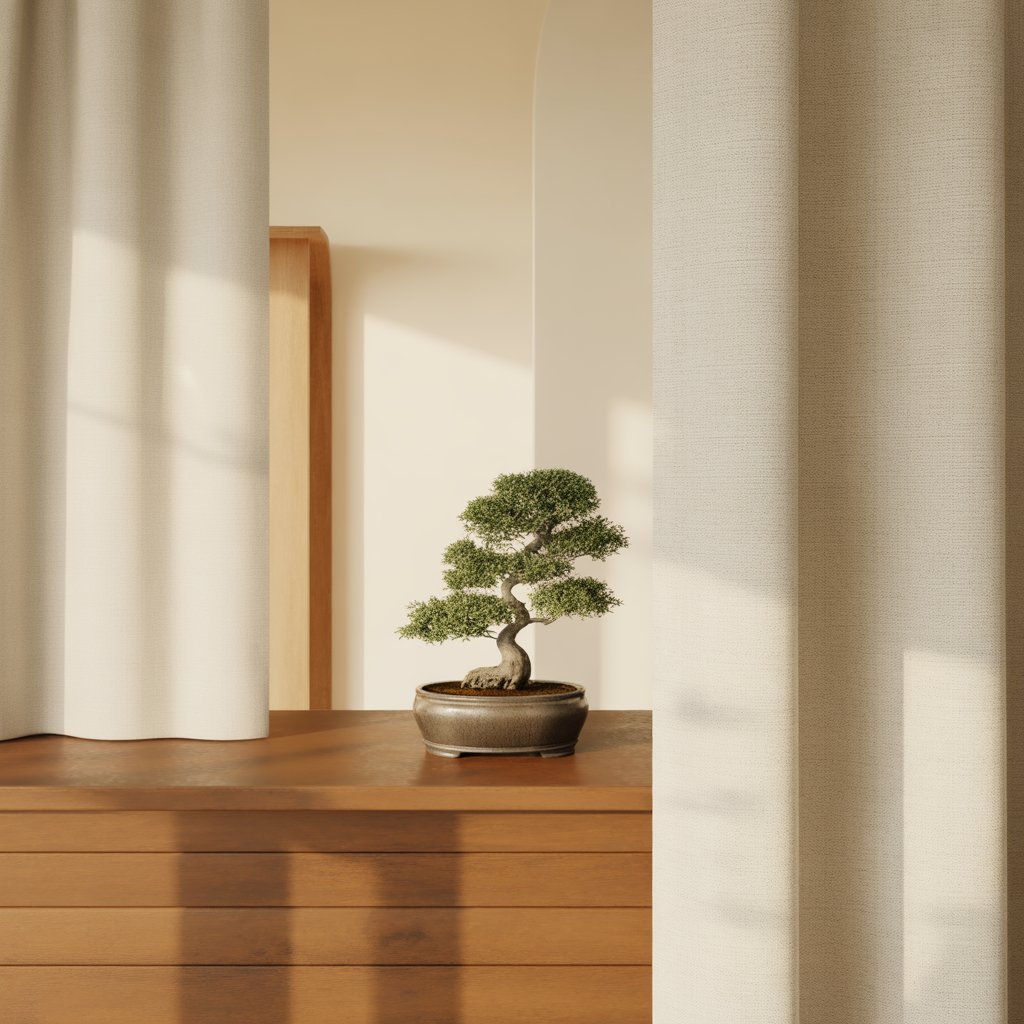
Plants bring life into Japandi interiors, but simplicity is key. Choose plants with clean shapes like snake plants, bonsai trees, or olive trees. Place them in simple ceramic or matte clay pots in neutral tones. Avoid overcrowding; one or two statement plants are enough to enhance the space naturally.
Greenery softens minimal spaces and adds a refreshing contrast to neutral tones. Plants also connect your interior with nature, which is a core element of both Japanese and Scandinavian design. Keep arrangements minimal and thoughtfully placed to maintain balance and calmness.
6. Decluttered Open Spaces
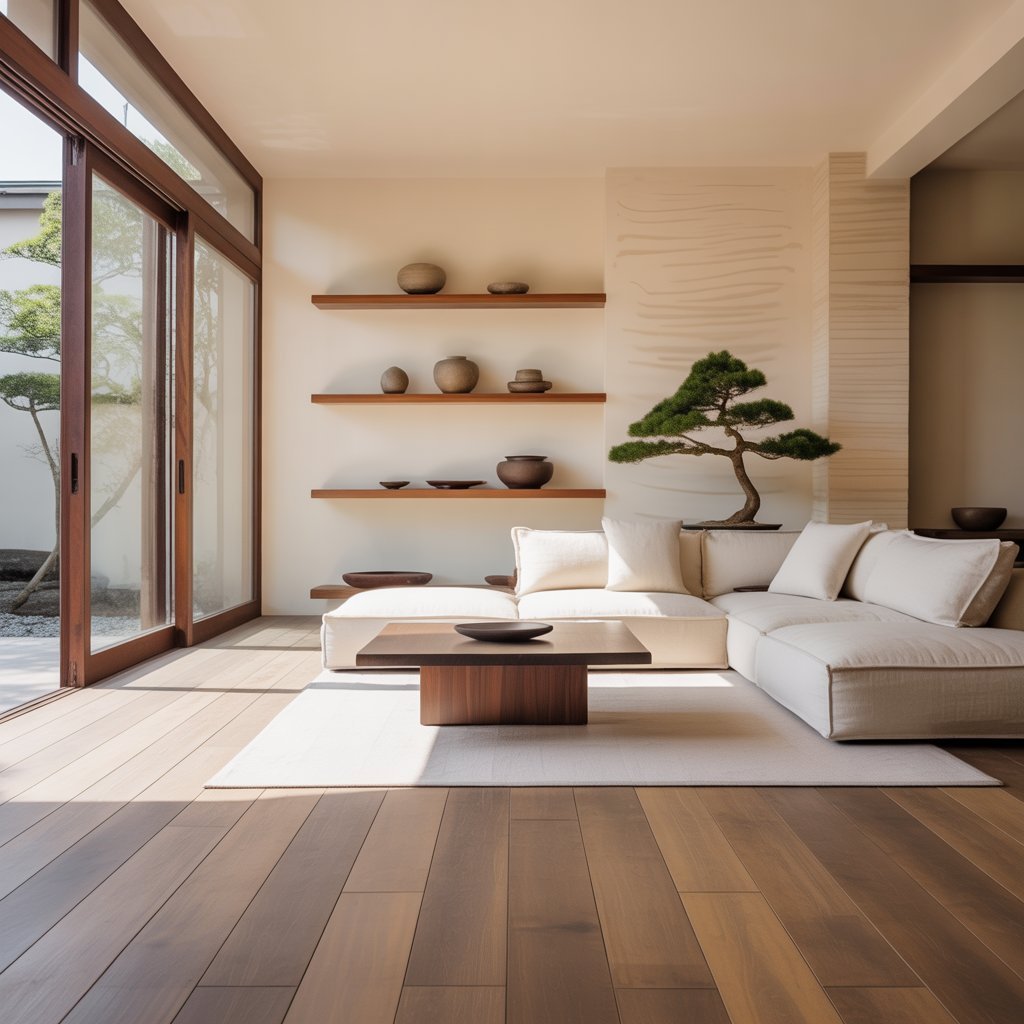
A clutter-free environment is essential in Japandi decor. Remove unnecessary items and keep only functional or meaningful pieces. Open space between furniture allows better flow and creates a peaceful atmosphere. Avoid overcrowding shelves or tables to maintain visual calmness.
Intentional spacing makes even small rooms feel bigger and more breathable. Japandi design values simplicity and mindful living, so every object should have a purpose. Clean surfaces and organized layouts contribute to a relaxing and harmonious home.
7. Soft Ambient Lighting
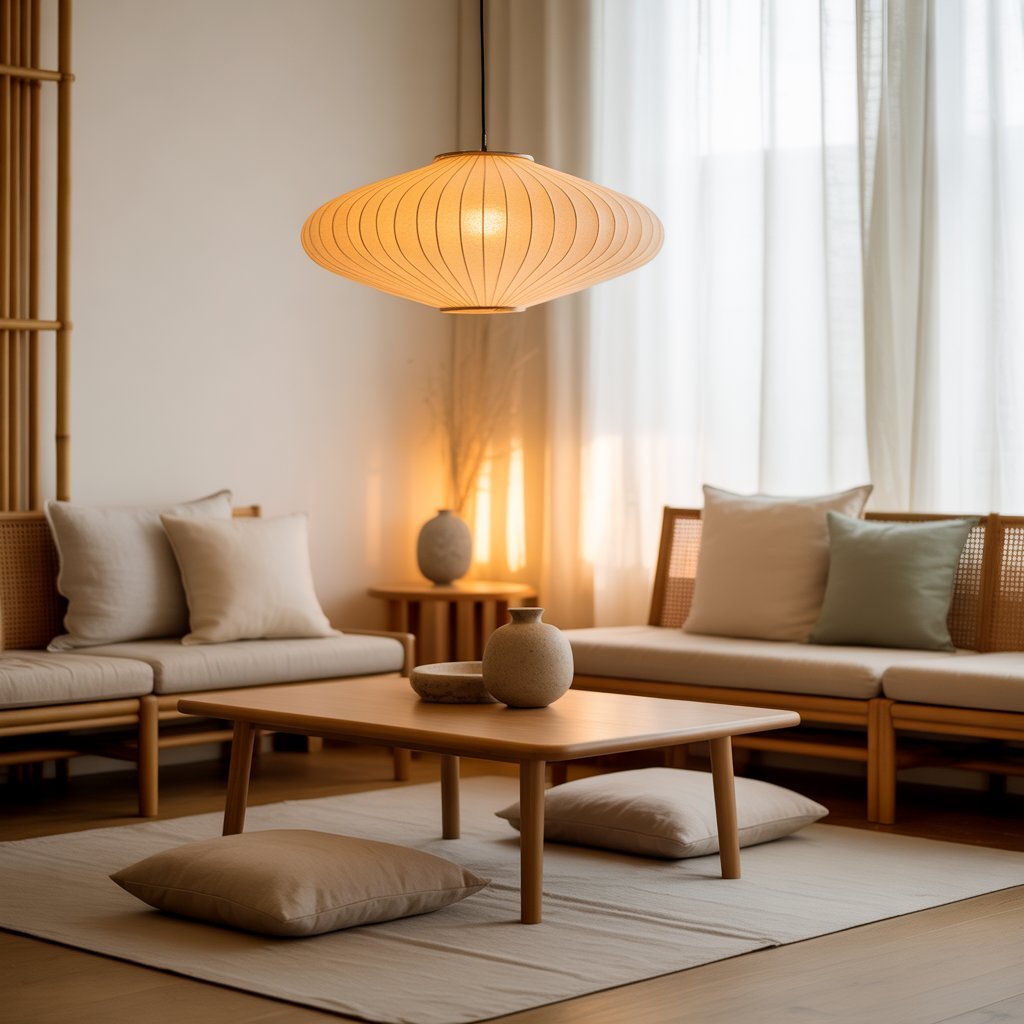
Lighting should feel warm and gentle rather than harsh. Use paper lanterns, soft-glow floor lamps, or wooden base table lamps to create cozy ambiance. Layered lighting adds warmth without overwhelming the minimal aesthetic.
Natural daylight is equally important in Japandi interiors. Keep windows light and airy with sheer curtains. Soft lighting enhances textures and creates a calm, inviting mood perfect for relaxing evenings.
8. Sliding Wooden Panels
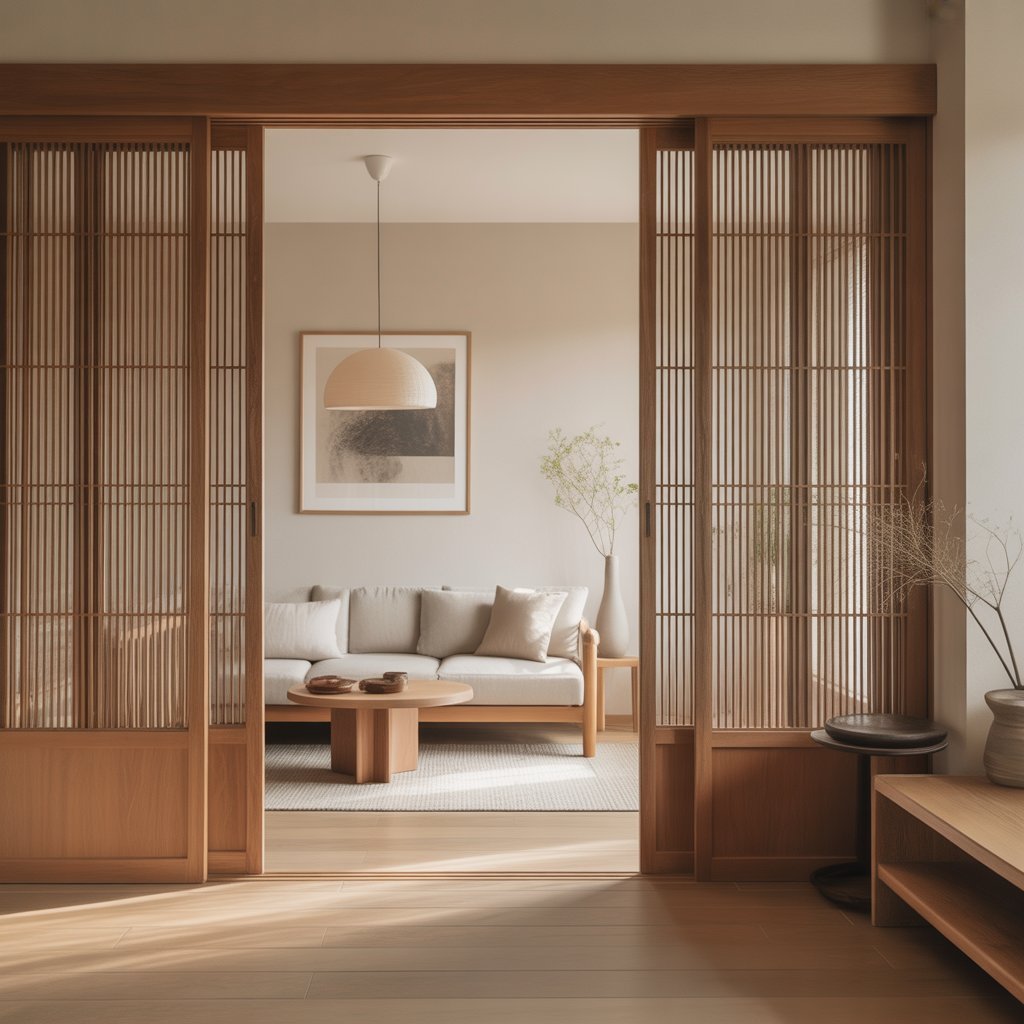
Sliding wooden panels instantly add a Japanese-inspired touch to your Japandi home. These panels can be used as room dividers, closet doors, or decorative wall features. Their clean lines and natural wood tones maintain the minimalist look while adding warmth and architectural interest. Unlike heavy doors, sliding panels feel light and airy, helping your space look open and uncluttered. They also improve functionality by separating areas without completely blocking light.
In small homes or studio apartments, sliding panels create flexible living zones while preserving a cohesive design. Frosted glass or wooden lattice styles work beautifully for maintaining privacy while allowing soft light to pass through. Their simplicity aligns perfectly with Japandi values of functionality and elegance. Choosing neutral finishes keeps the design timeless and calming.
9. Simple Ceramic Decor
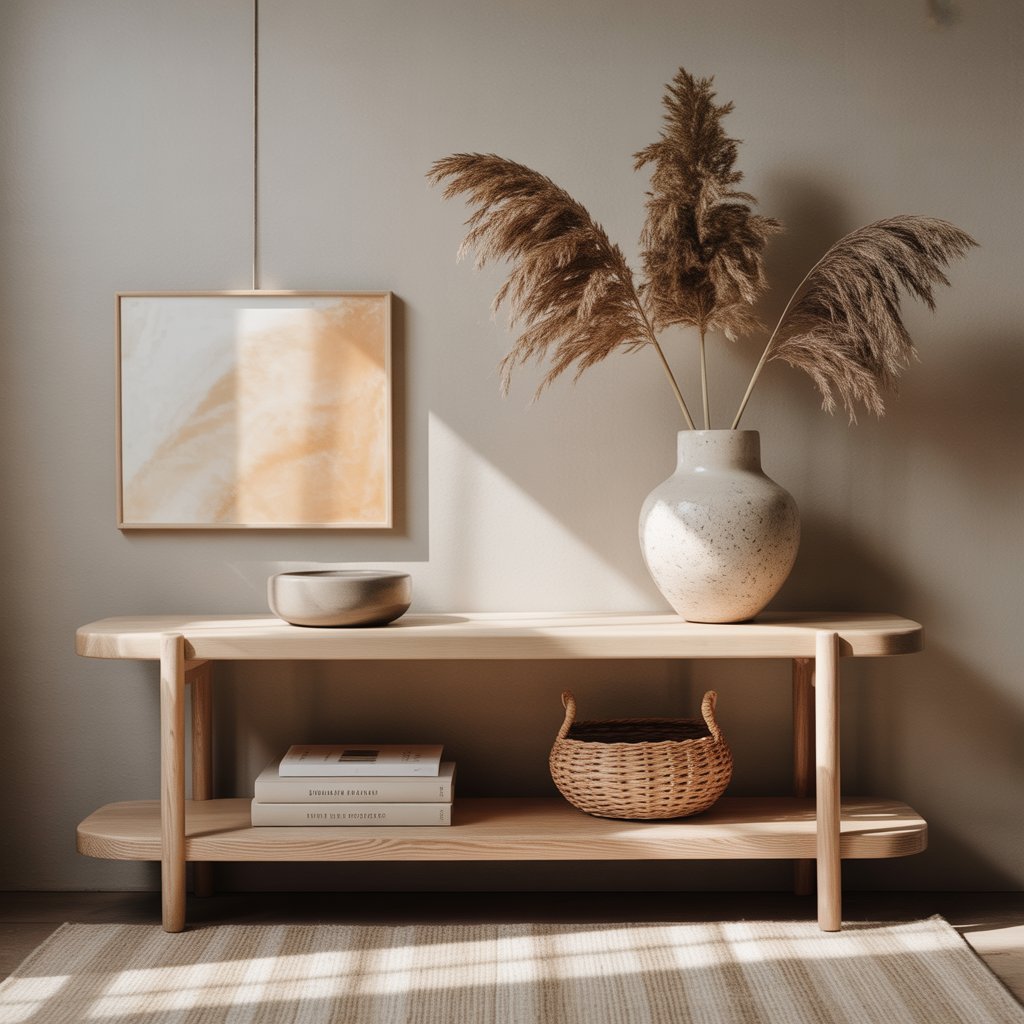
Ceramic decor pieces are essential for adding subtle character to a Japandi home. Choose handmade vases, bowls, or sculptural pieces in muted tones like off-white, sand, or soft grey. Imperfect shapes and matte finishes embrace the Japanese concept of wabi-sabi, celebrating beauty in simplicity and imperfection. Keep styling minimal by displaying only a few carefully chosen items on shelves or tables.
Instead of filling surfaces with decorative objects, focus on meaningful pieces that add texture and depth. A single ceramic vase with dried pampas grass can transform a console table effortlessly. These natural elements blend seamlessly into neutral interiors and create a balanced, peaceful look without overwhelming the space.
10. Textured Area Rugs
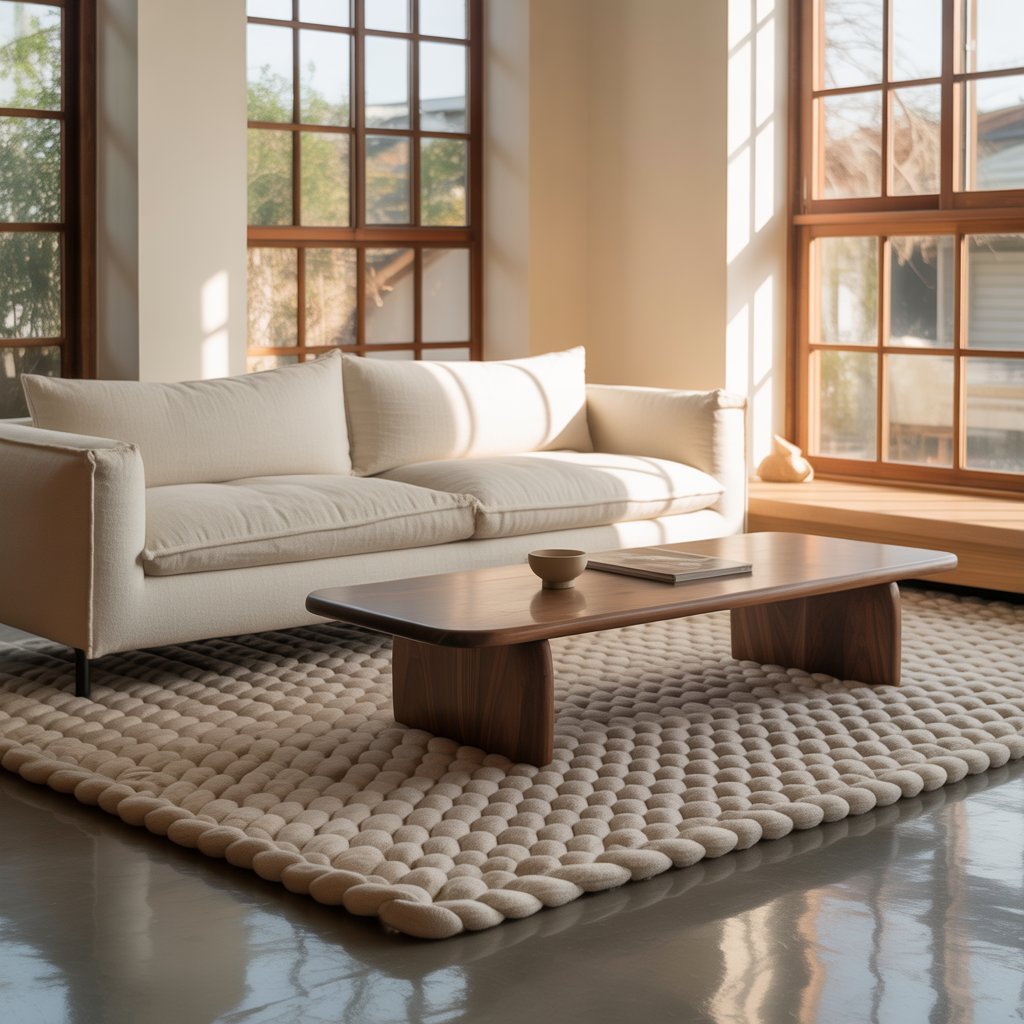
A textured area rug adds warmth and comfort to Japandi interiors while maintaining minimal aesthetics. Choose rugs made from natural fibers like wool, jute, or cotton in neutral shades. Subtle patterns or woven textures provide visual interest without being too bold. Rugs help define seating areas and make the space feel grounded and cozy.
Avoid bright colors or heavy prints, as they can disrupt the calm environment. Instead, opt for soft beige, ivory, or muted grey tones. Layering textures through rugs enhances the cozy Scandinavian influence while maintaining Japanese simplicity. The right rug can make your living space feel inviting and balanced.
11. Wooden Dining Table Simplicity
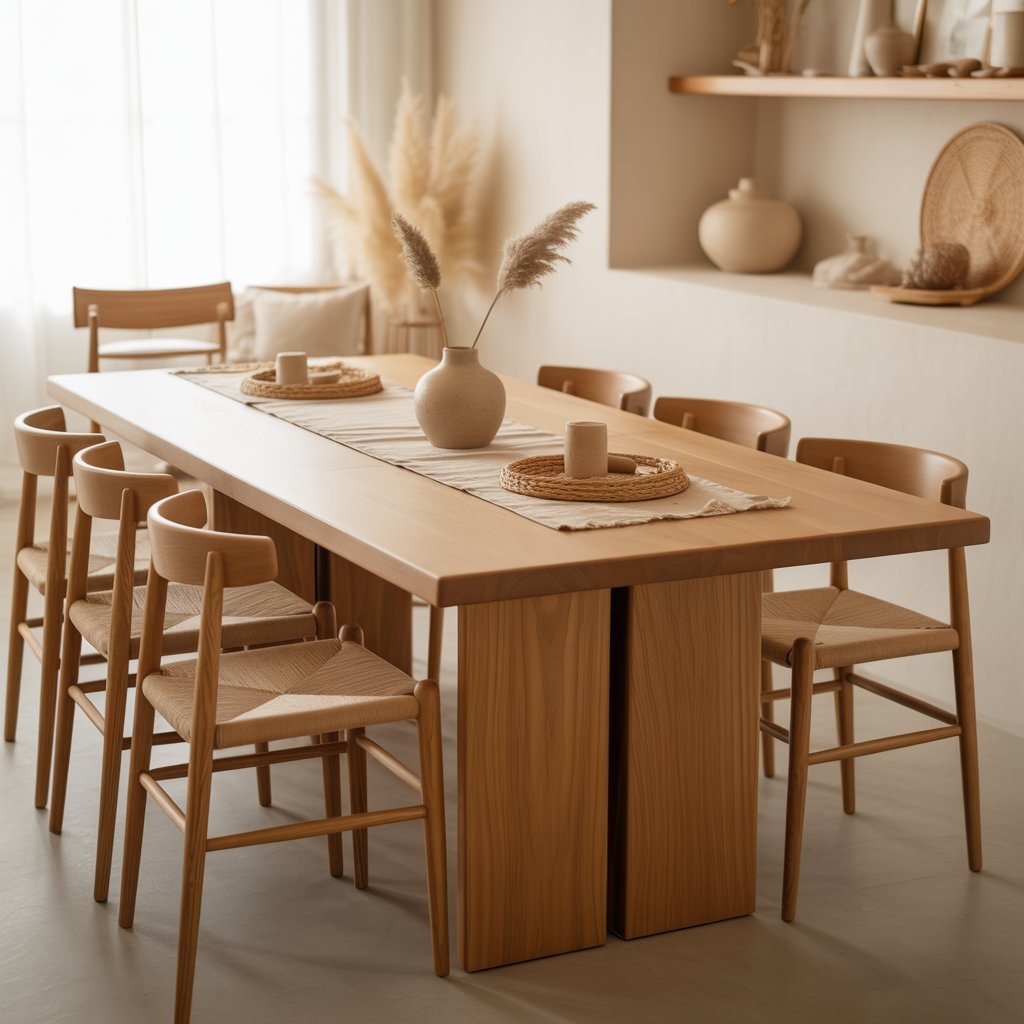
A solid wooden dining table becomes the heart of a Japandi-inspired home. Choose a table with clean lines and a natural finish to highlight the beauty of wood grain. Avoid overly decorative legs or glossy surfaces. Simple wooden chairs with soft cushions complete the look without overpowering the room.
Keep table styling minimal with a single ceramic centerpiece or linen runner. The goal is to create a warm and inviting space for mindful dining experiences. Natural materials and simple forms encourage connection and calmness, making your dining area both functional and aesthetically pleasing.
12. Neutral Bedroom Styling
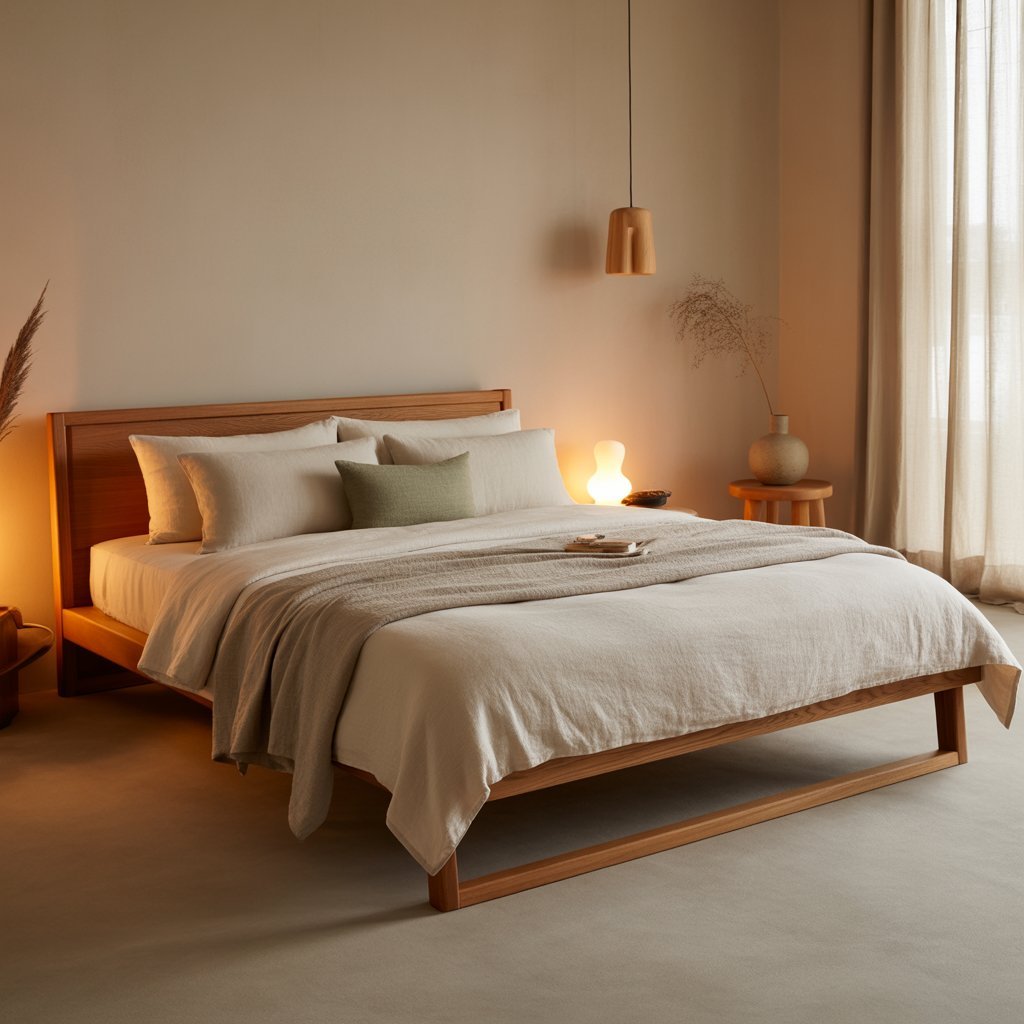
A Japandi bedroom should feel like a peaceful retreat. Use neutral bedding in soft whites, beige, or warm grey tones. Layer linen sheets with light duvets and textured throw blankets for depth. Keep the bed frame low and simple to enhance the grounded feeling of the room.
Avoid excessive decorative pillows or bold patterns. Instead, focus on soft textures and breathable fabrics. Minimal bedside decor, such as a small lamp and ceramic vase, keeps the space clean and calming. A neutral bedroom promotes better relaxation and creates a serene environment perfect for unwinding.
13. Open Wooden Shelving
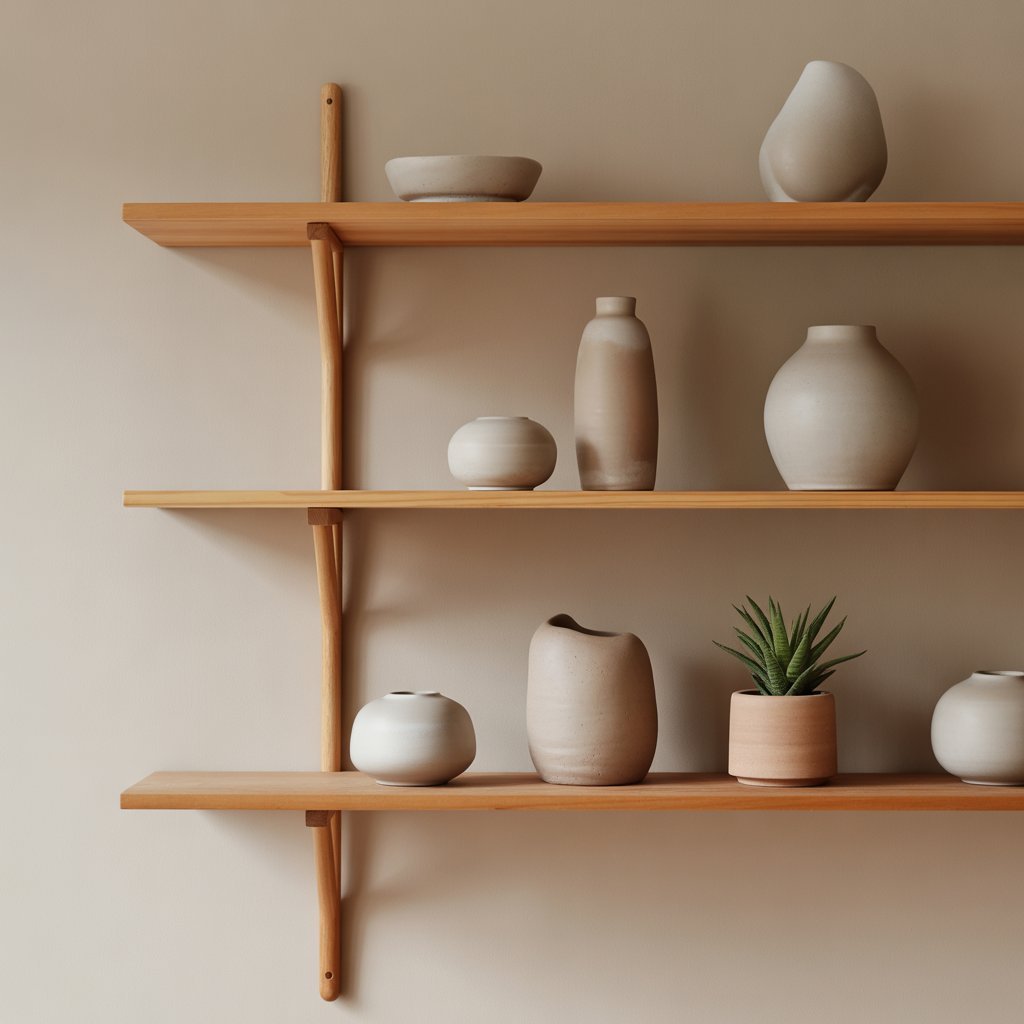
Open wooden shelves provide practical storage while maintaining Japandi aesthetics. Choose floating shelves in light oak or walnut finishes to display carefully selected items. Keep arrangements balanced and uncluttered by spacing objects thoughtfully.
Mix books, ceramics, and small plants for a natural look. Avoid overcrowding the shelves, as negative space is important in Japandi design. Organized shelving enhances functionality and adds warmth without disrupting the minimalist vibe of your home.
14. Black Accent Details
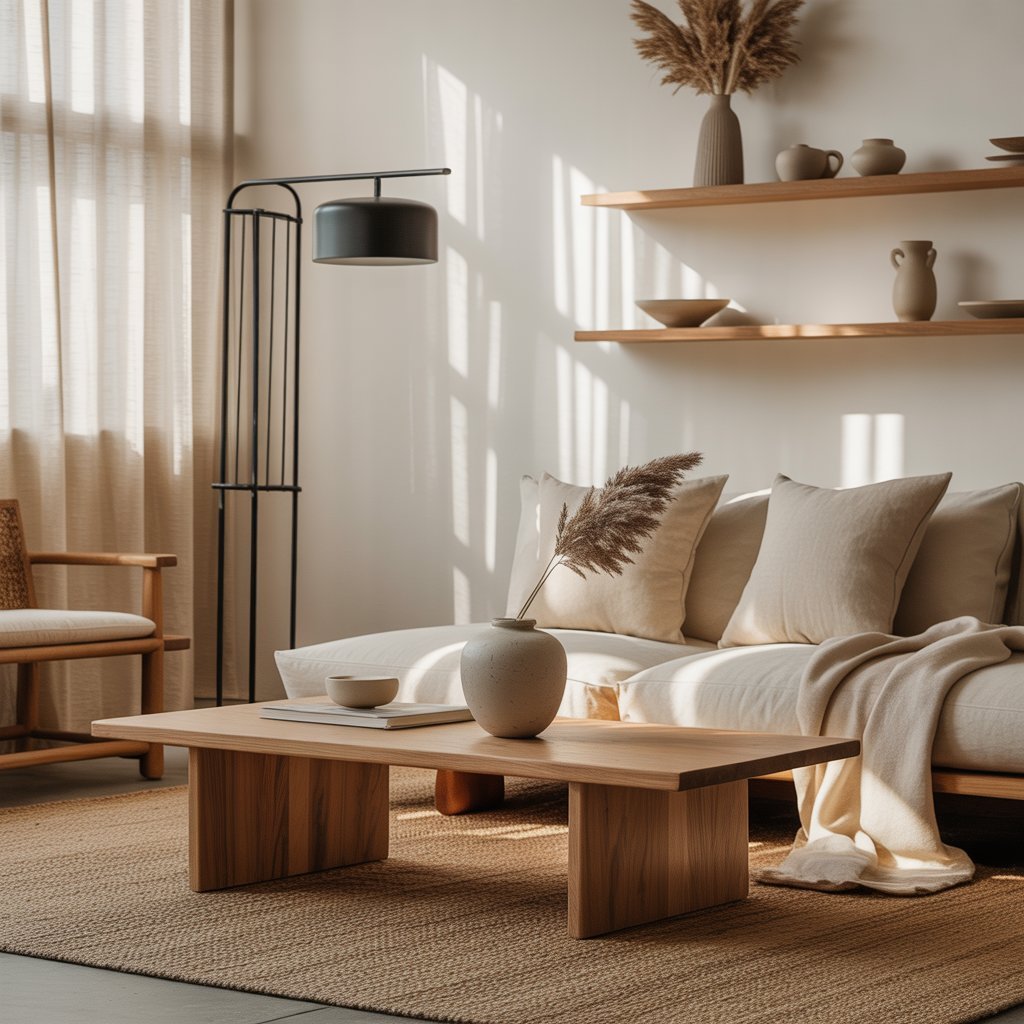
Adding subtle black accents creates contrast and sophistication in Japandi interiors. Thin black metal frames, light fixtures, or cabinet handles provide visual depth without overpowering neutral tones. These accents balance the softness of beige and wood elements.
Keep black details minimal and intentional. Too much contrast can feel harsh, so use it sparingly. When done correctly, black accents anchor the space and give it a modern Scandinavian touch while preserving the calm Japanese influence.
15. Handmade Pottery
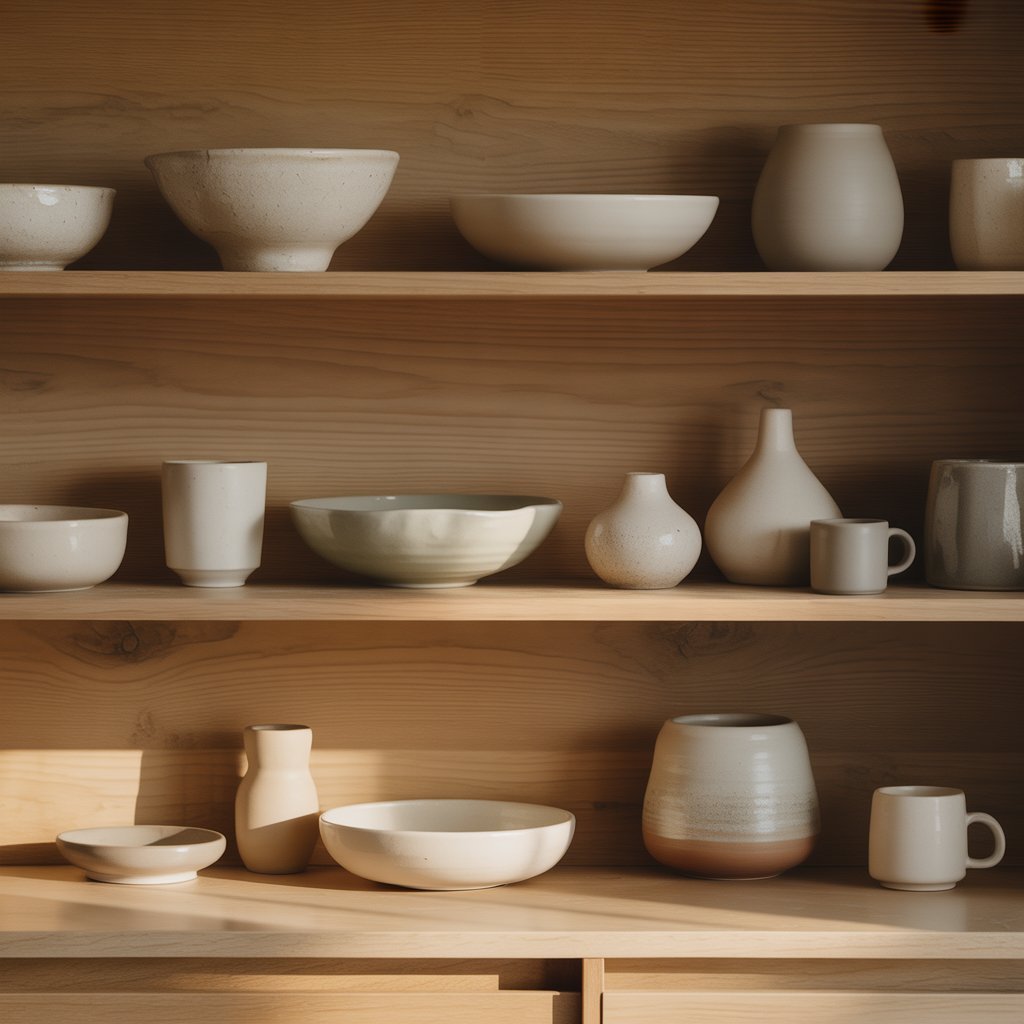
Handmade pottery adds authenticity and warmth to Japandi homes. Unique shapes and earthy finishes reflect craftsmanship and simplicity. Display pottery on dining tables, shelves, or kitchen counters for subtle decoration.
Natural clay tones complement wooden textures beautifully. These pieces celebrate imperfection and add quiet character without overwhelming the room. Keeping decor artisanal and meaningful aligns perfectly with Japandi’s philosophy of mindful living.
16. Cozy Reading Corner
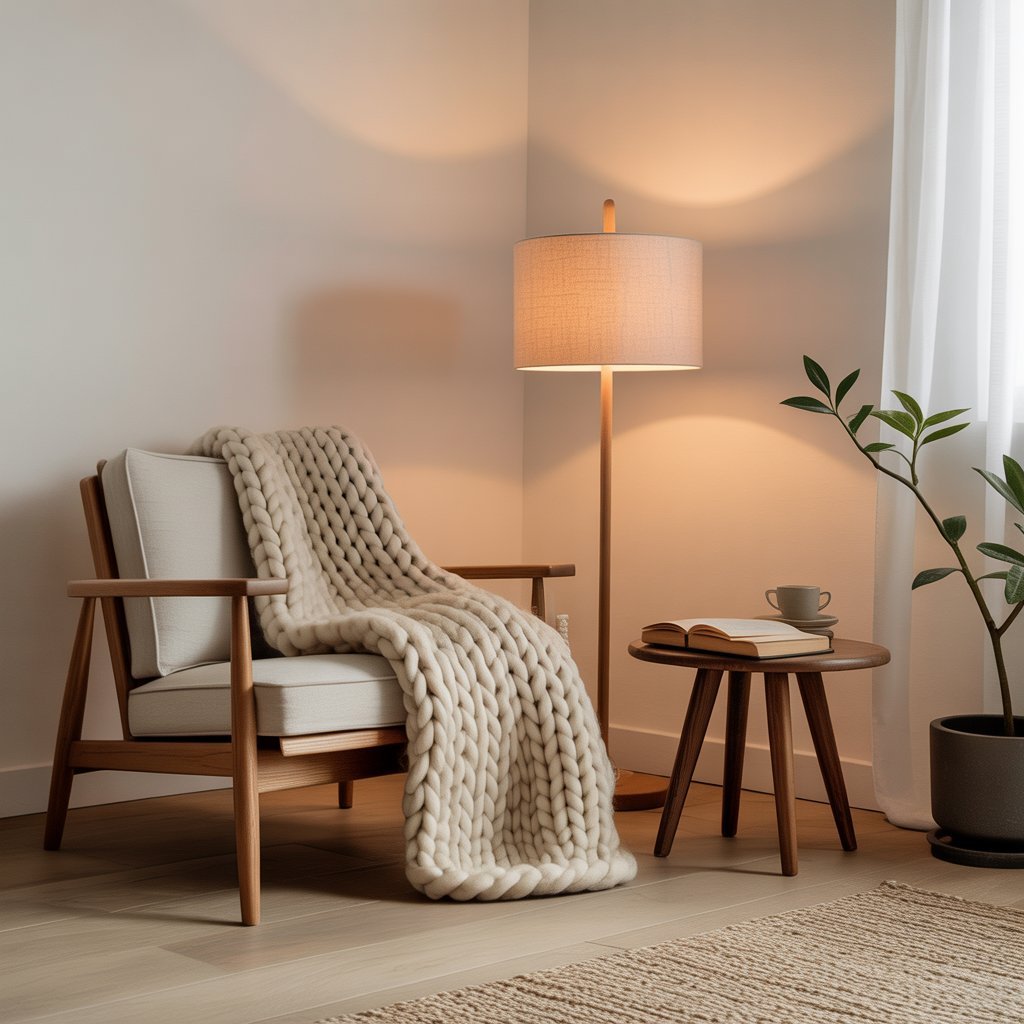
Create a small reading corner with a low chair, soft throw blanket, and simple wooden side table. Keep colors neutral and lighting warm to encourage relaxation. This space should feel peaceful and uncluttered.
Add one floor lamp and perhaps a small plant to complete the look. A cozy reading corner reflects the Japandi principle of intentional comfort, combining minimal styling with warmth and functionality.
17. Stone and Natural Elements
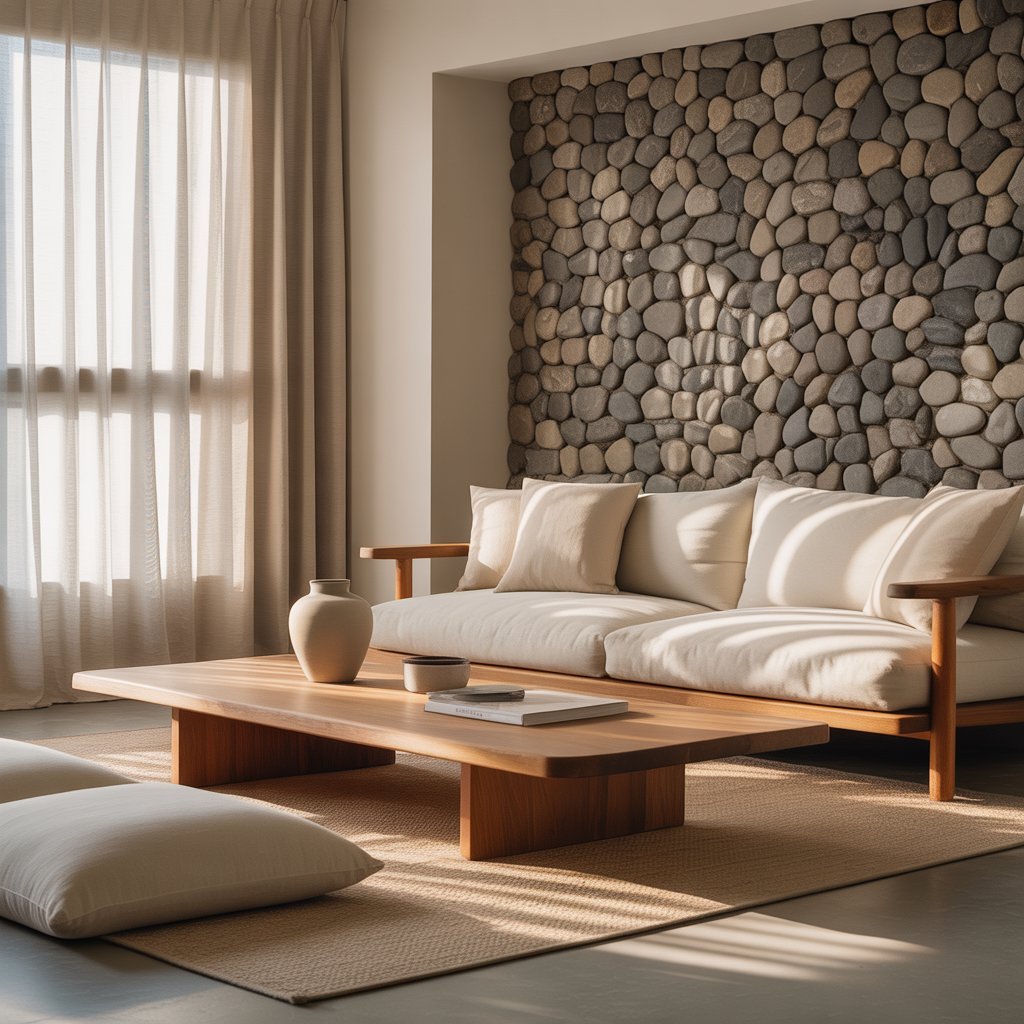
Incorporate stone decor pieces, such as marble trays or stone sculptures, to add organic texture. These elements enhance the natural aesthetic while maintaining simplicity.
Balance stone with soft textiles and warm wood to avoid a cold appearance. Natural materials connect your home to the outdoors and create a grounded, calming atmosphere that feels timeless.
18. Functional Storage Solutions
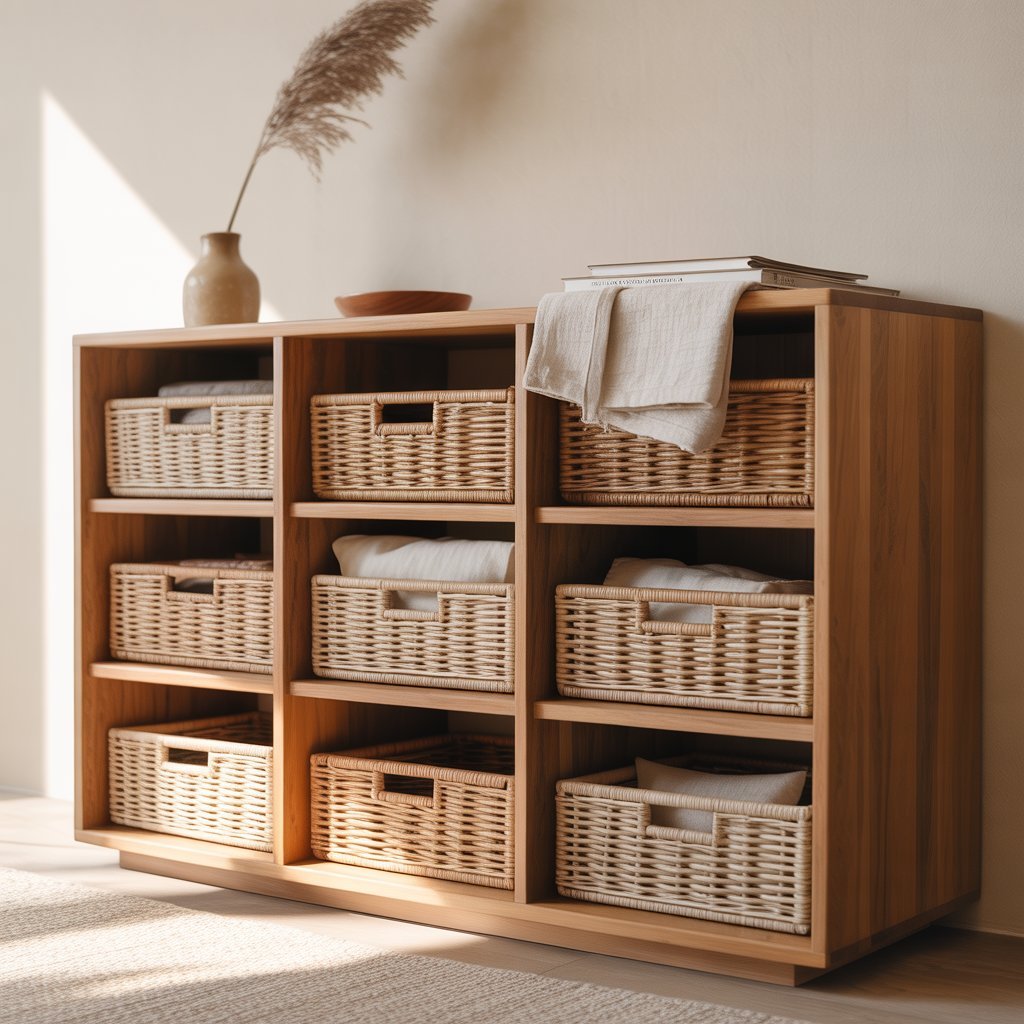
Storage in Japandi design should be both practical and beautiful. Choose wooden cabinets with hidden compartments to keep clutter out of sight. Clean surfaces enhance the peaceful aesthetic.
Woven baskets or fabric storage boxes can add texture while staying organized. Smart storage solutions maintain minimalism and ensure your space remains calm and tidy.
19. Layered Neutral Bedding
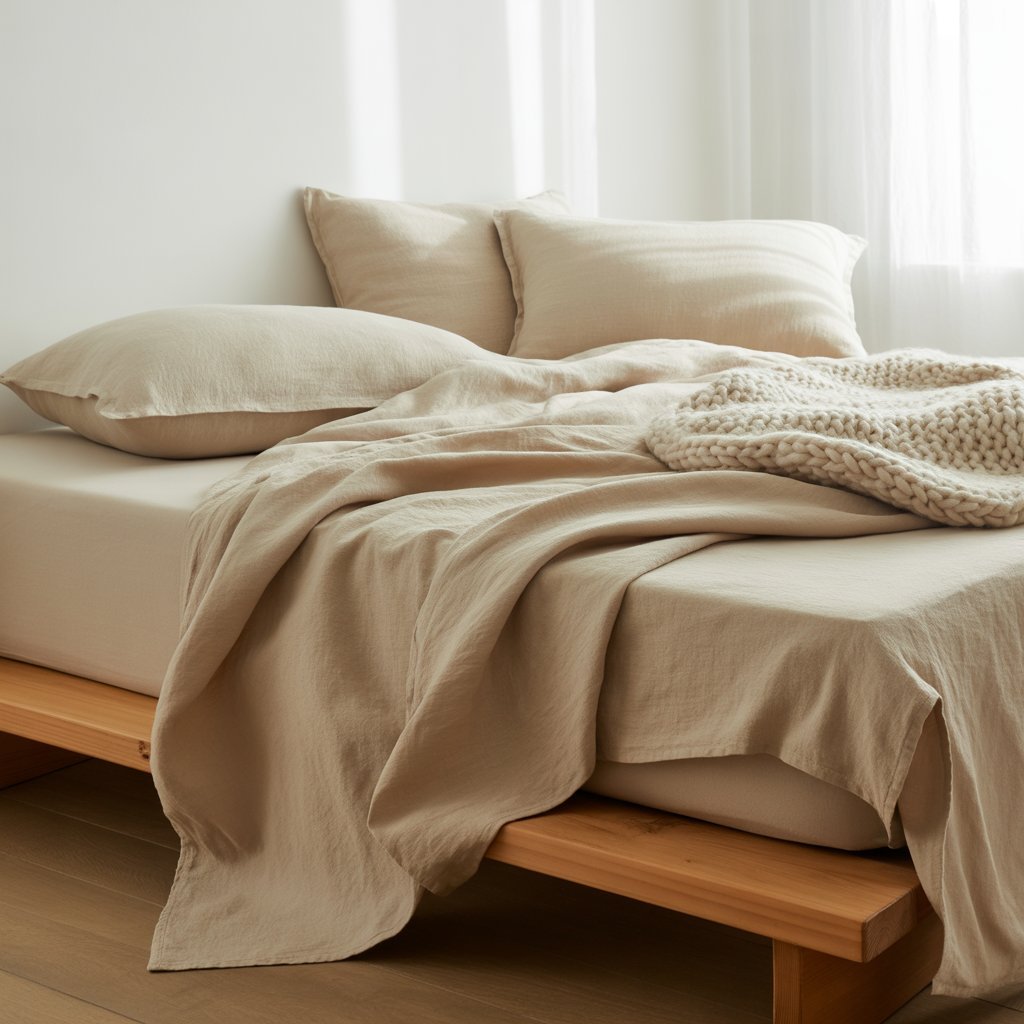
Layering bedding creates depth while maintaining simplicity. Combine linen sheets, cotton blankets, and textured throws in soft neutral shades. Keep patterns subtle or absent.
This layered approach adds comfort without visual noise. The mix of textures enhances coziness and warmth, making your bedroom feel luxurious yet minimal.
20. Simple Entryway Styling
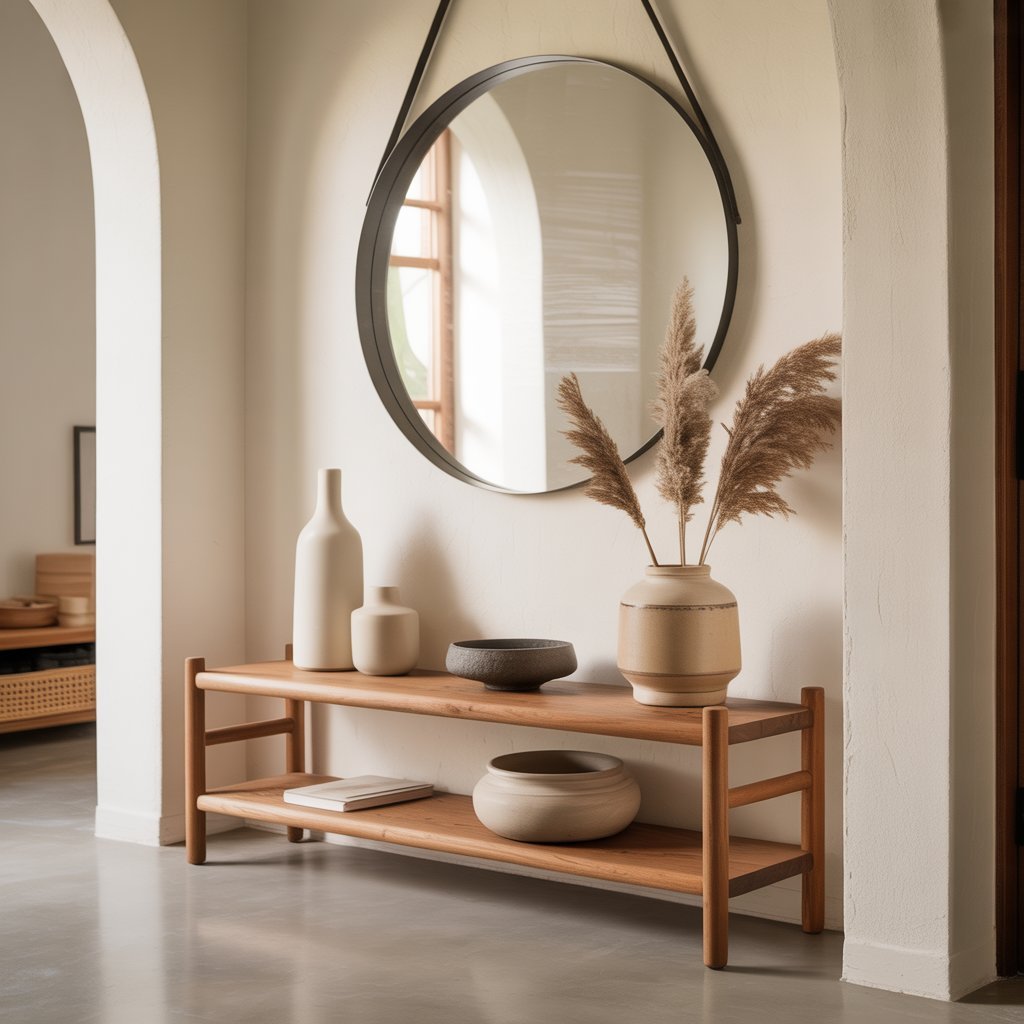
Your entryway sets the tone for your home. Choose a slim wooden console table with minimal decor. Add a round mirror and a ceramic bowl for keys.
Keep the area uncluttered and functional. A calm entryway immediately creates a welcoming and balanced first impression while reflecting Japandi elegance.
21. Calm Bathroom Aesthetic
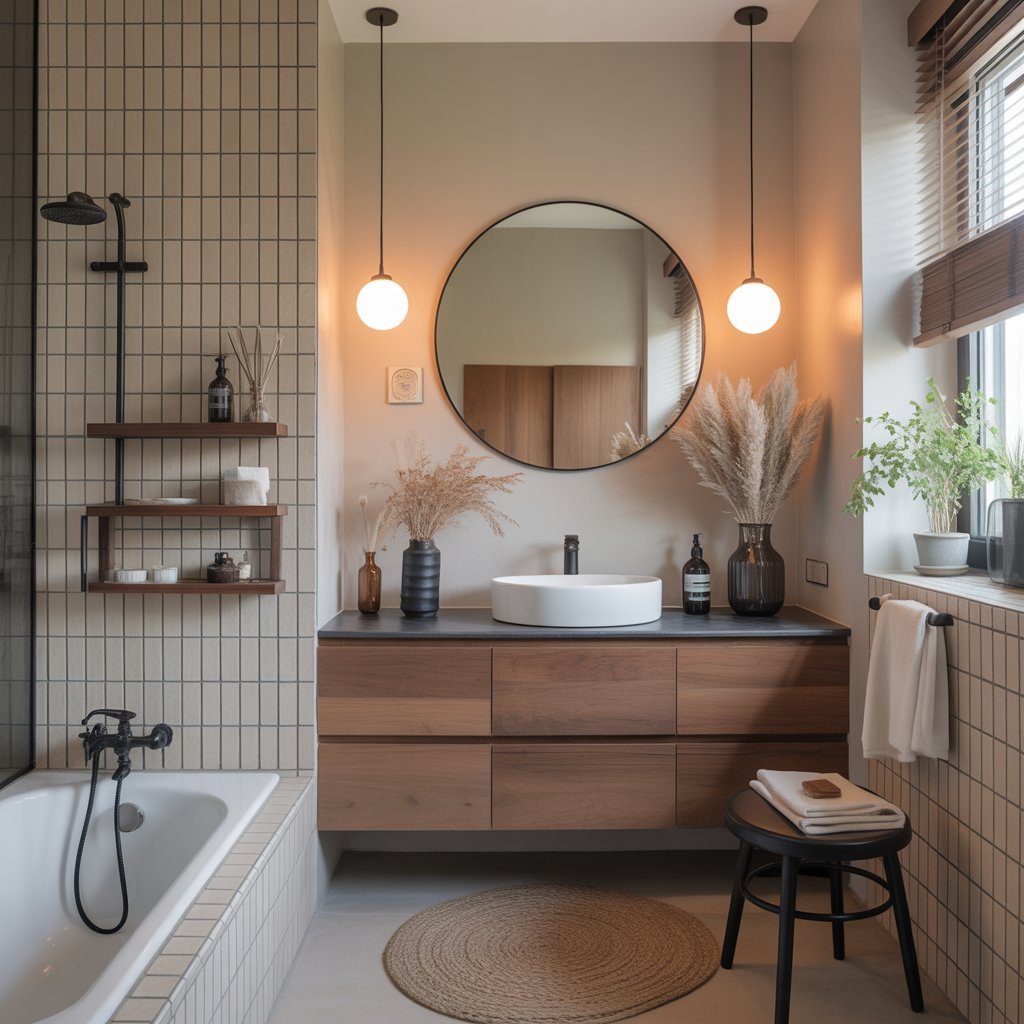
Transform your bathroom into a spa-like retreat with neutral tiles, wooden accents, and soft lighting. Keep counters clear and organized.
Add simple accessories like rolled white towels and ceramic soap dispensers. Natural textures and minimal styling create a peaceful environment perfect for relaxation and self-care.
Step-by-Step Guide to Create a Calm Japandi Home
Step 1: Start with a Neutral Foundation
Before buying new decor pieces, focus on your base colors. Paint walls in warm white, soft beige, or muted grey tones. These colors instantly create a calming atmosphere and allow natural materials to shine. A neutral foundation helps you build a cohesive Japandi look without making the space feel busy or overwhelming.
Declutter first before decorating. Remove unnecessary items and keep only what serves a purpose or brings joy. Japandi design is not about adding more, but about refining what you already have. This step creates mental clarity and prepares your space for a minimalist transformation.
Step 2: Choose Functional Furniture
Select furniture that is simple, low-profile, and made from natural wood. Clean lines and smooth finishes are key elements of Japandi interiors. Avoid bulky or heavily detailed pieces that disrupt visual harmony. Every furniture item should combine beauty with functionality.
Focus on quality over quantity. A solid wooden dining table, a low platform bed, or a simple linen sofa can completely define your space. When you choose fewer but better pieces, your home feels intentional, peaceful, and effortlessly stylish.
Step 3: Add Warm Textures
After setting the foundation, introduce texture through natural fabrics like linen curtains, cotton bedding, wool throws, or jute rugs. Texture prevents the space from looking flat while maintaining minimalism. Soft layers create warmth and comfort without visual clutter.
Mix materials thoughtfully—combine wood with stone, ceramic with fabric, and woven baskets with smooth surfaces. This balance reflects the harmony between Japanese simplicity and Scandinavian coziness, making your home feel both elegant and inviting.
Step 4: Keep Decor Intentional
Decorate mindfully by selecting a few meaningful pieces instead of filling every corner. A ceramic vase, a bonsai plant, or a simple abstract artwork can add personality while maintaining calmness. Negative space is just as important as decorative objects in Japandi styling.
Always step back and evaluate your space. If something feels unnecessary or visually heavy, remove it. Japandi interiors thrive on balance, simplicity, and breathing space. The goal is to create a peaceful environment where every item has a purpose.
Step 5: Focus on Soft Lighting
Lighting plays a major role in creating a calming Japandi atmosphere. Choose warm light bulbs instead of bright white ones. Paper lanterns, wooden lamps, or soft floor lighting add gentle warmth to the space.
Natural light is equally important. Use sheer curtains to allow sunlight to filter softly into the room. Soft lighting enhances textures, reduces harsh shadows, and creates a cozy yet minimal mood perfect for relaxation.
Conclusion: Creating Your Calm Minimal Retreat
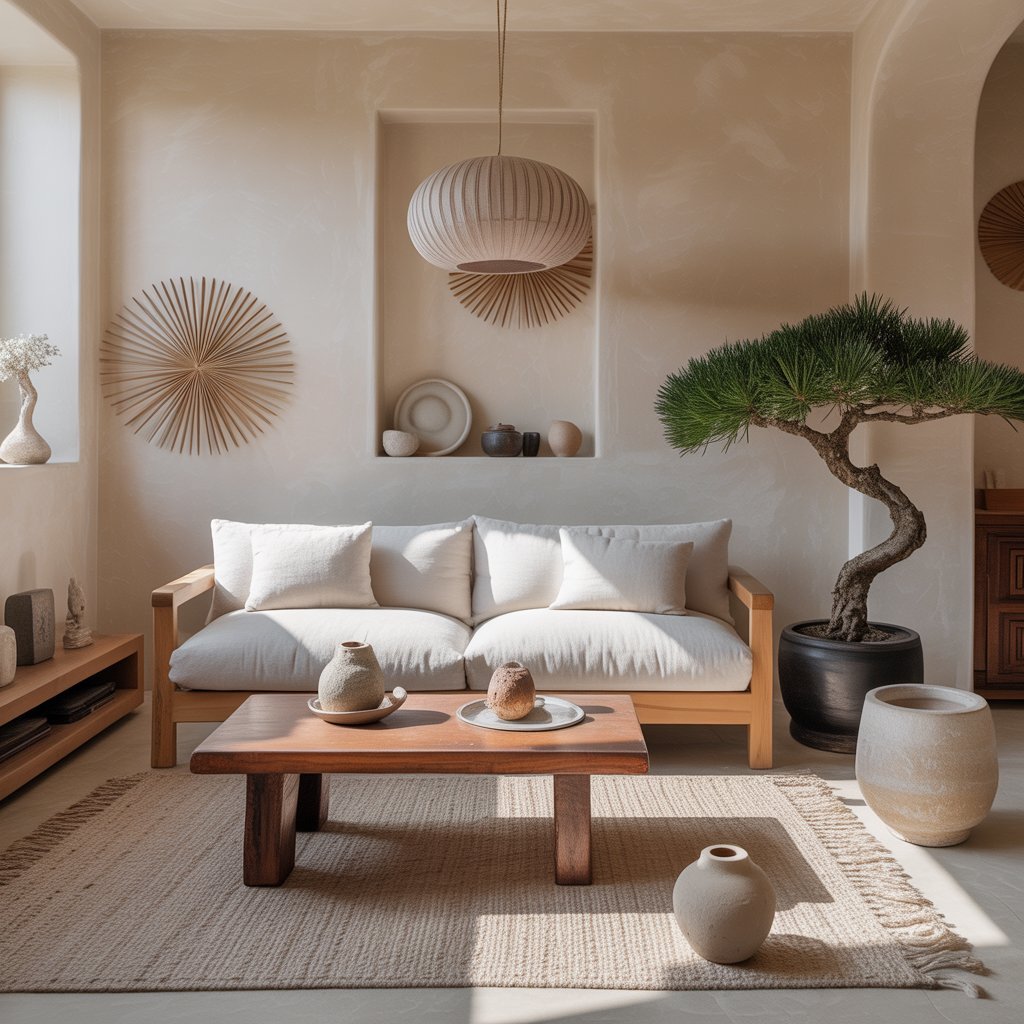
Japandi home decor is more than just a trend — it is a lifestyle centered around simplicity, balance, and intentional living. By combining Japanese minimalism with Scandinavian warmth, you can create a home that feels peaceful, functional, and beautifully timeless. Every neutral tone, wooden texture, and carefully chosen decor piece works together to reduce visual noise and promote calmness.
The true beauty of Japandi design lies in its ability to make your home feel like a sanctuary. It encourages mindful decorating, thoughtful choices, and appreciation for natural materials. Whether you live in a small apartment or a spacious home, these ideas can transform your space into a calm retreat where simplicity meets comfort.
Start small, edit gradually, and focus on harmony rather than perfection. With patience and intention, your home can become a serene, clutter-free haven that supports relaxation and everyday well-being.